WINGS Learning Center
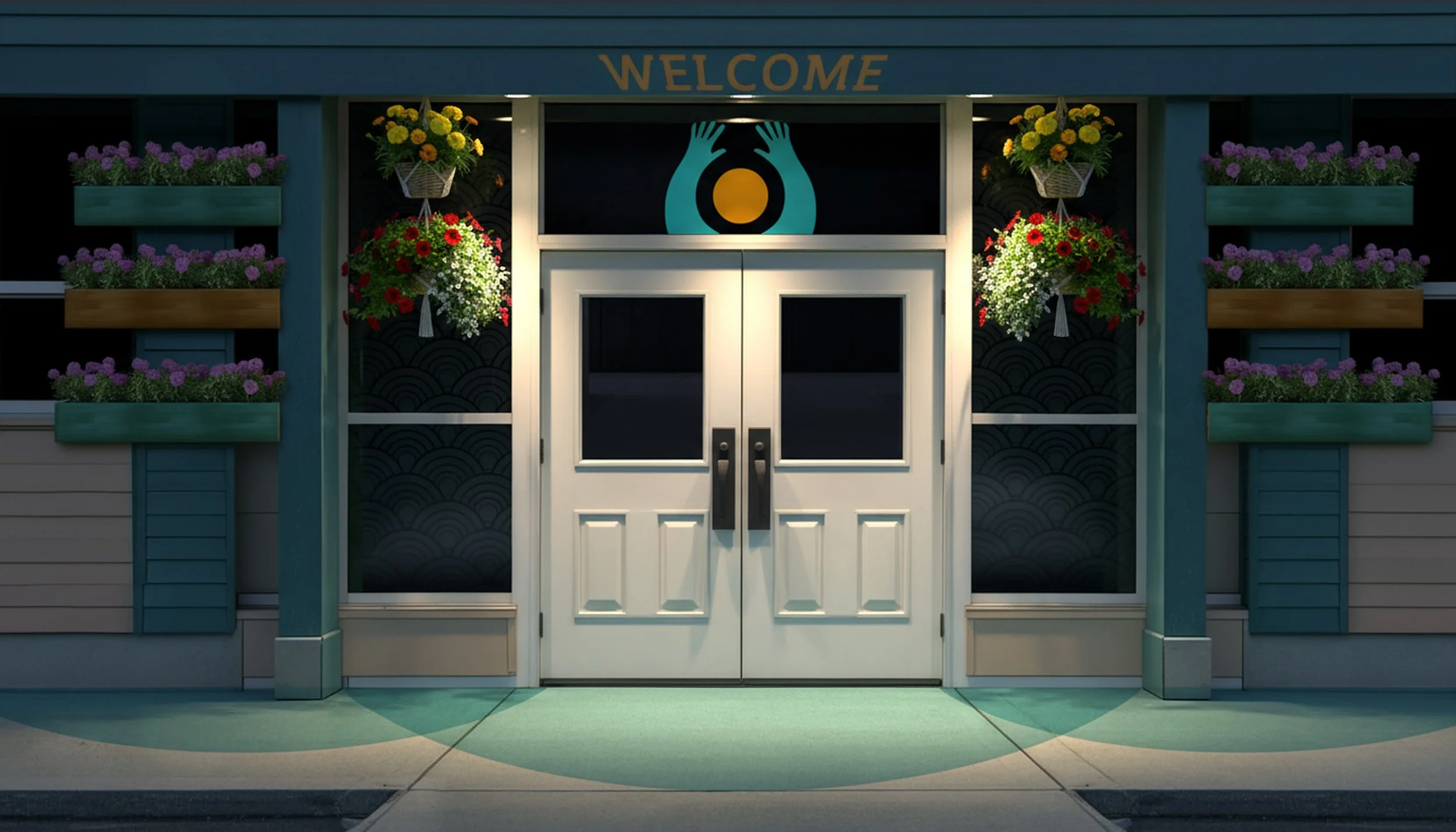
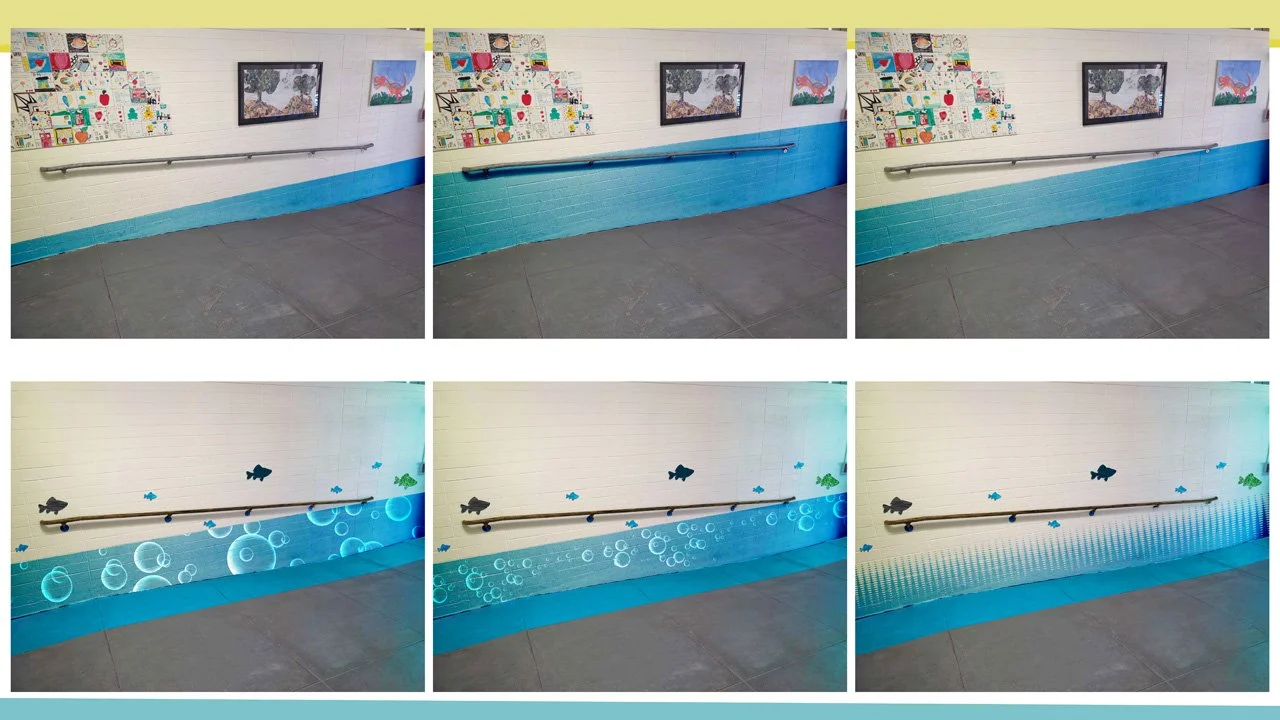
I developed a research-driven visual and wayfinding system for WINGS Learning Center that makes classrooms and corridors more comfortable for autistic students. Expert consultations, immersive fieldwork, and iterative prototypes informed by user personas, led to calming, functional visuals. The flexible design system now serves as a repeatable model for autism-inclusive educational environments.
I. The Challenge
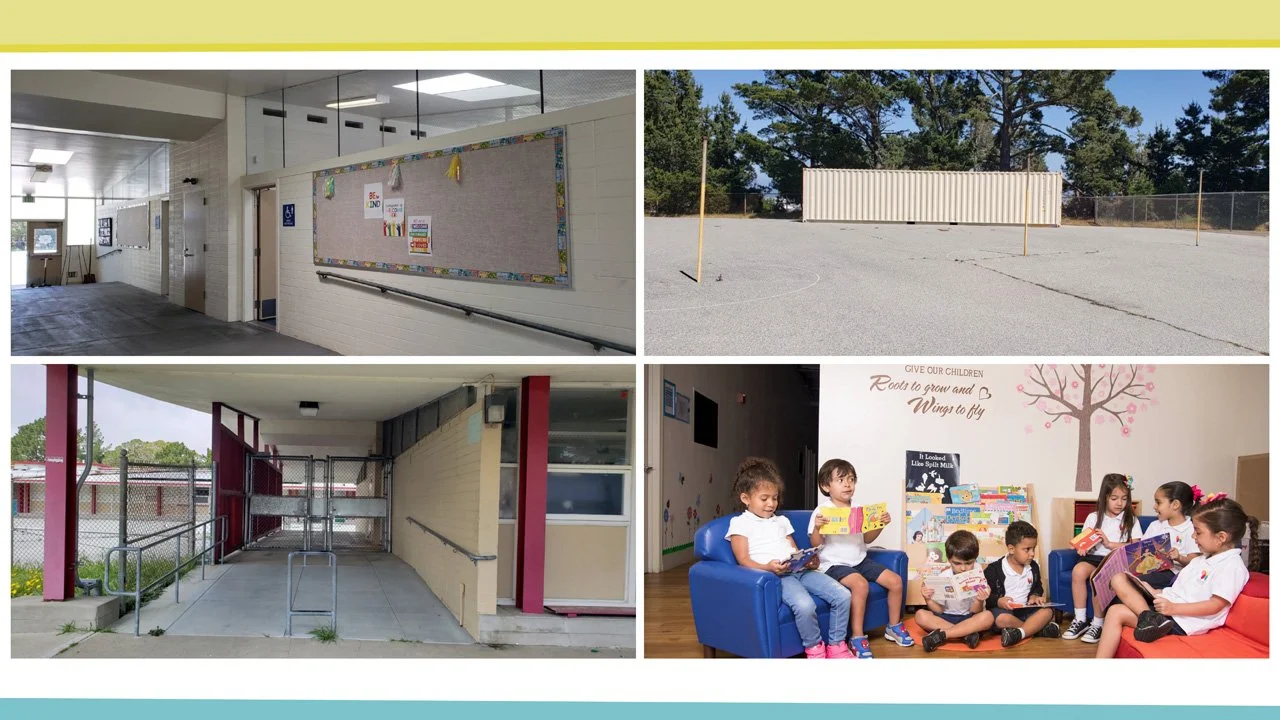
WINGS Learning Center, a private school for children and adults with moderate to severe autism, relocated to a new campus that was not optimized for sensory accessibility. The school’s leadership needed a design system that could make classrooms and hallways more sensory-friendly without the cost of major remodeling. This would include a campus map and associated wayfinding system for both students and parents or visitors.
II. The Mission
My goal was to ground every decision in research evidence and empathy for people with autism, while producing deliverables teachers could realistically implement. Sensory input for touch, sound, sight and executive function would all need to be examined in the context of interior design. Proposals would be submitted for feedback from teachers and stakeholders at Wings to ensure realistic considerations for the needs of their students.
III. The Journey
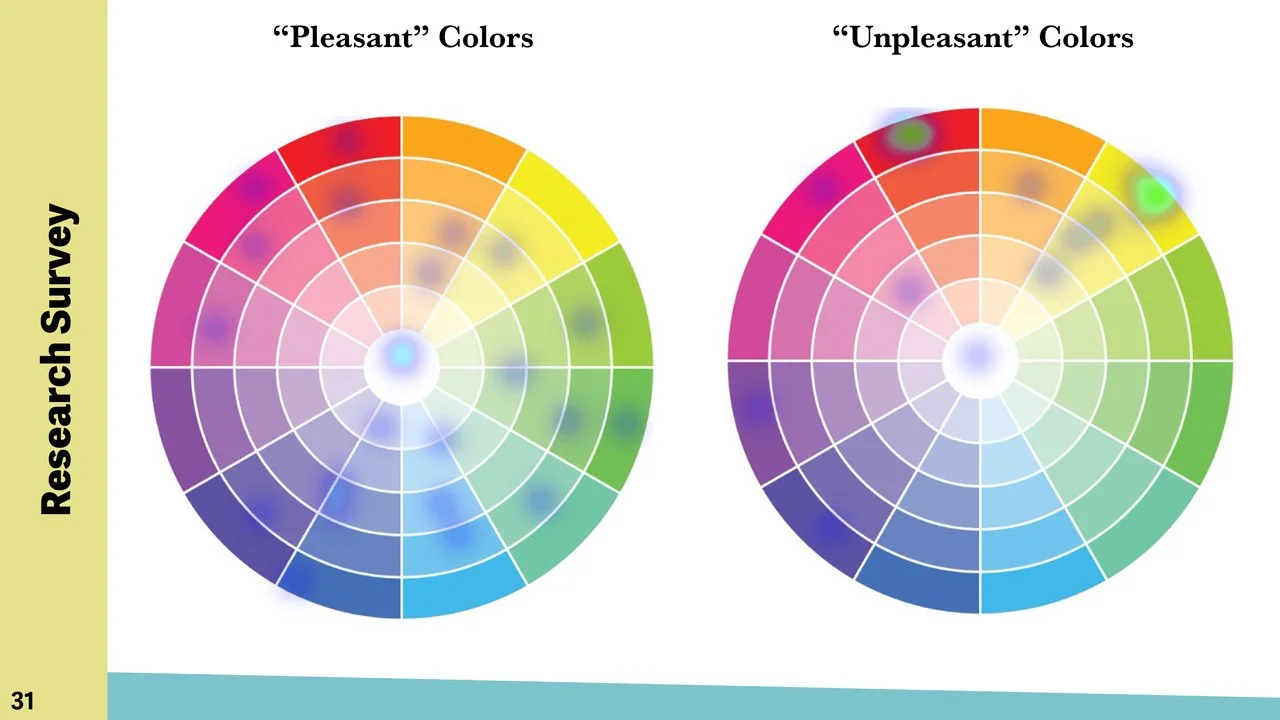
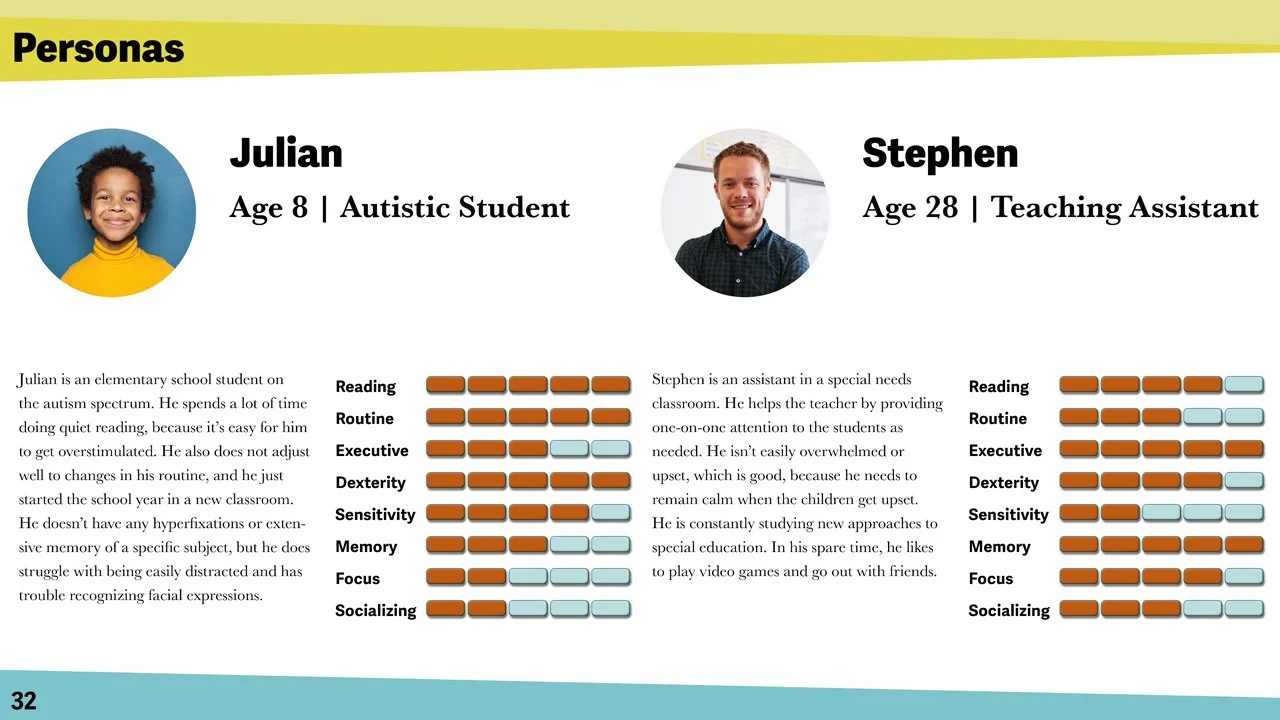
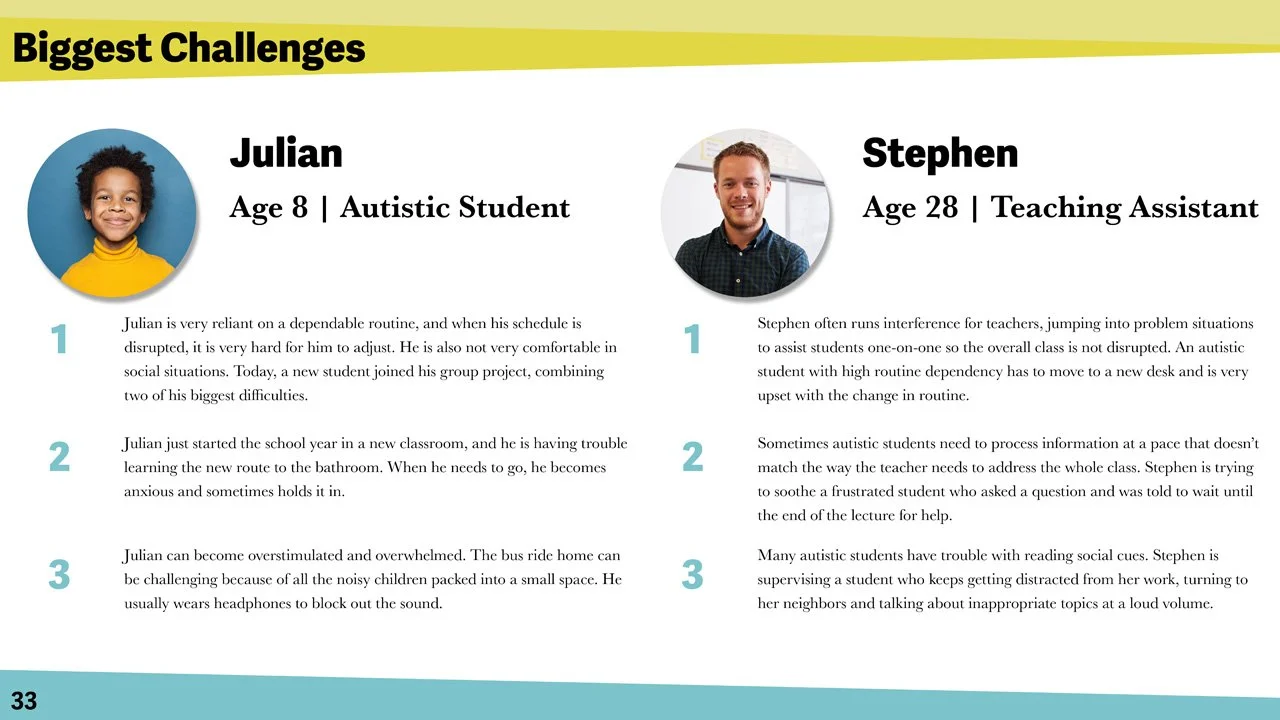
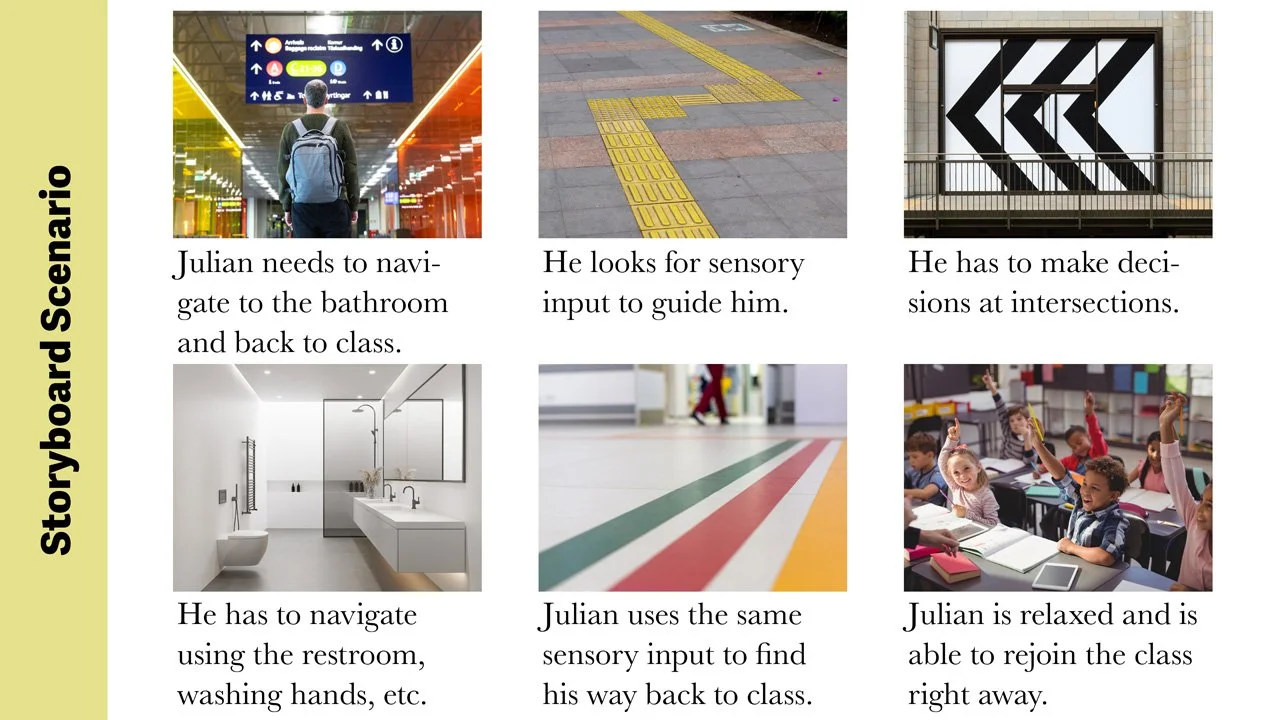
I conducted immersive field research, including on-site visits, environmental audits, and interviews with WINGS staff and caregivers. I also collaborated with a panel of professional advisors (including a disability specialist, a regional center director, and the school’s facilities head) to validate design feasibility. I modeled detailed personas and journey maps representing diverse sensory profiles and executive function challenges. I tested through iterative prototyping and feedback rounds, and developed a brand-specific color palette based on “low-arousal” sensory research.
IV. The Impact
The final system reduced hallway confusion and sensory overstimulation, earning positive feedback from both staff and students. 60% of users reported visual comfort improvements and 30% increased tactile engagement with navigation elements. The adaptable design guide and asset library now allow WINGS to replicate the system across future sites demonstrating how empathy-based design and real-world collaboration can create inclusive, soothing educational spaces for everyone.